

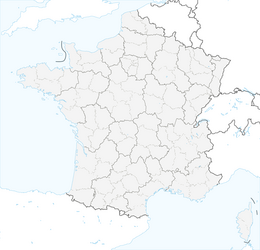


HIKE TO DISCOVER THE WILD ORCHID
In Tourbes during the Neolithic period, an important necropolis from the 1st Iron Age was discovered at Bonne-Terre and several Gallo-Roman villas have been identified around the village.In the 10th century,...
In Tourbes during the Neolithic period, an important necropolis from the 1st Iron Age was discovered at Bonne-Terre and several Gallo-Roman villas have been identified around the village.
In the 10th century, a small settlement existed with a church; called Torves then Torreves, the village became Tourbes.
Mentioned for the first time in 990, its history follows that of the town of Pézenas from 1261, the year when both towns were purchased by King Saint Louis.
The route starting from the heart of the village takes you to discover many winegrowers' houses from the 15th, 16th, and 17th centuries and the imposing 14th-century Saint-Saturnin church in southern Gothic style.
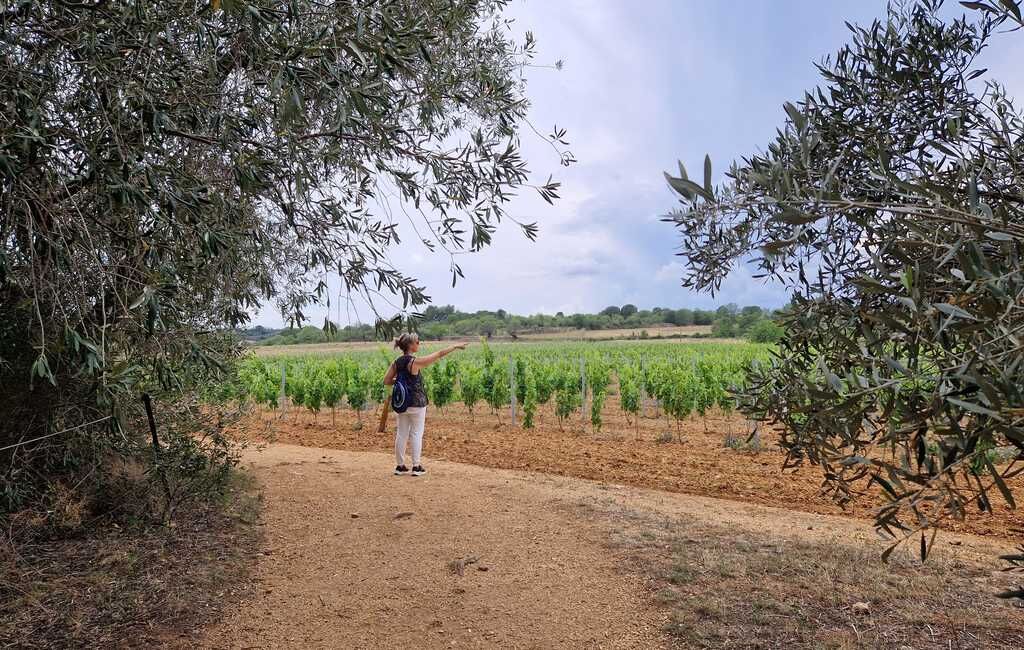
At the gates of Pézenas, discover Tourbes which stands on its hills dotted with garrigue, pine forests, and vines with its trail (marked in yellow) "Discovering the wild orchid" of 3 kilometers...


1
Starting point: From the parking lot at Saint-Saturnin church square*, turn right to Tour des Caves and immediately turn right onto Verdier street. At this corner, you can see a magnificent Ginkgo Biloba in the courtyard of a winegrower’s house. *The imposing building from the late 13th century, Saint-Saturnin church was built to replace an older building after Tourbes and Pézenas were bought by King Saint Louis from the children of Raymond de Salvignac. Its reconstruction between 1632 and 1645 was an ambitious architectural project for a small village. The southern Gothic style church consists of a single nave and three bays, and on the main façade, some stones indicate a planned expansion that was never completed. This majestic church with magnificent stained glass windows illuminating its 17th-century marble altar from Caunes is worth a visit!
2
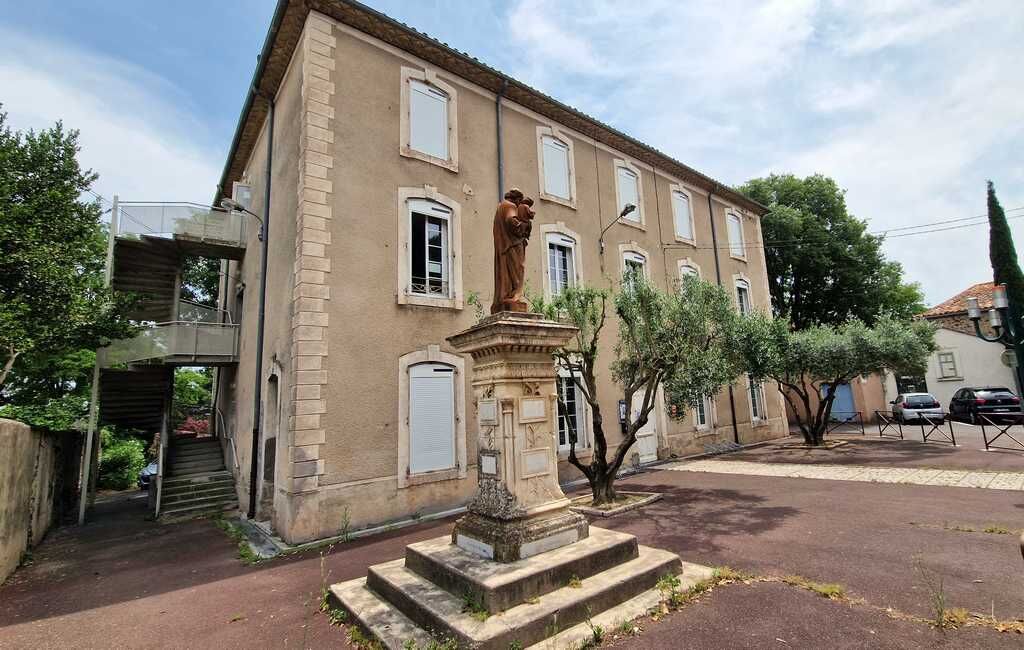
Continue straight on Verdier street. On your right, you notice the current community center, a former convent.
3
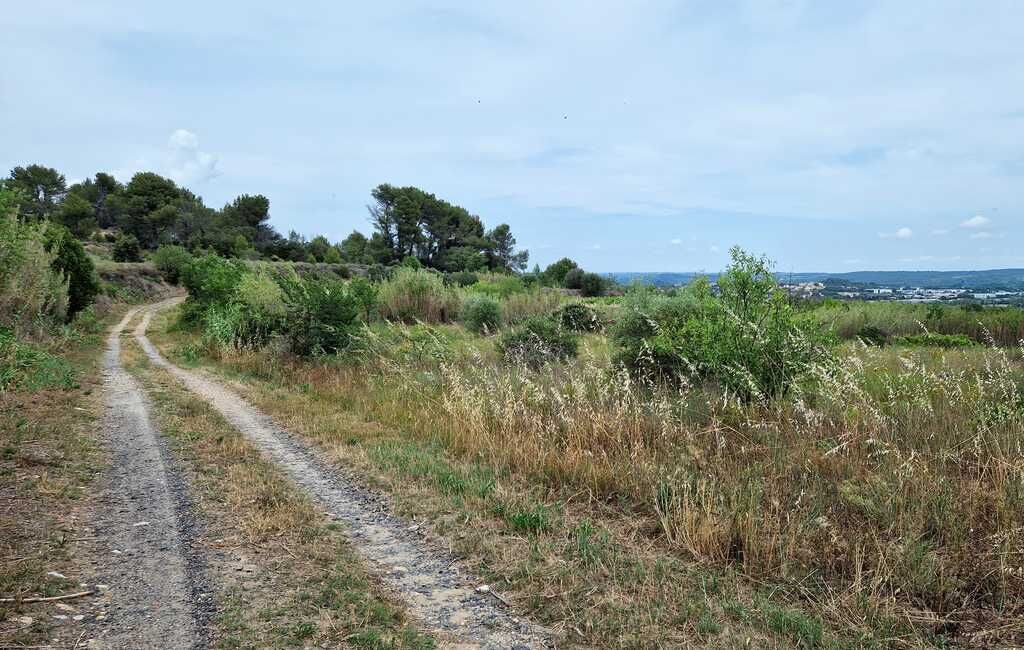
Direction: At the intersection with the Verdier housing estate (on the left), continue straight on Verdier path for about 700 meters. Viewpoint over the Estang Circle.
4
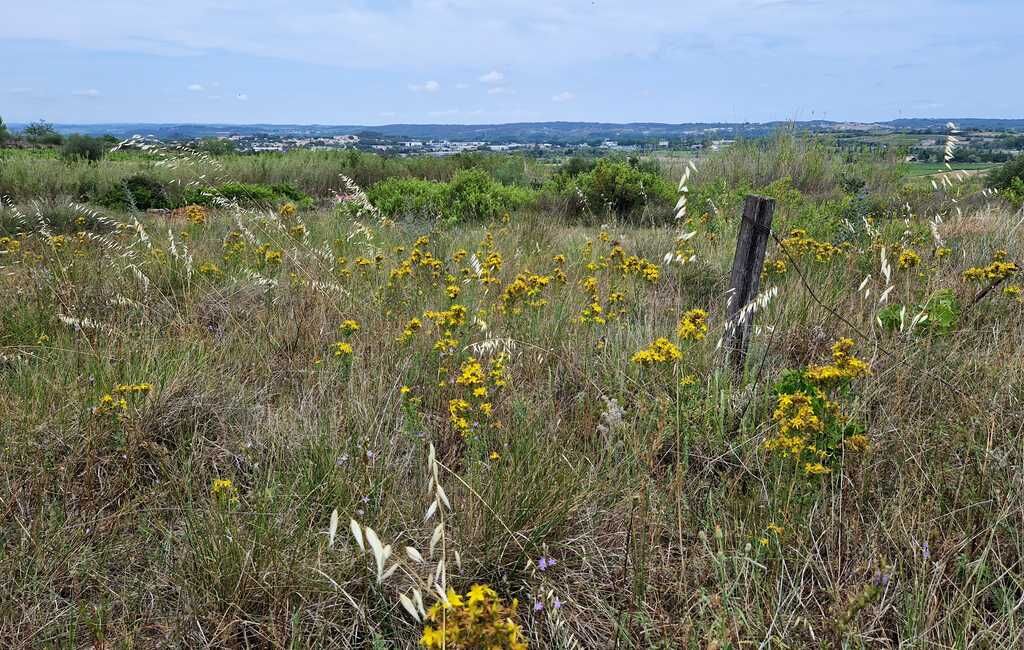
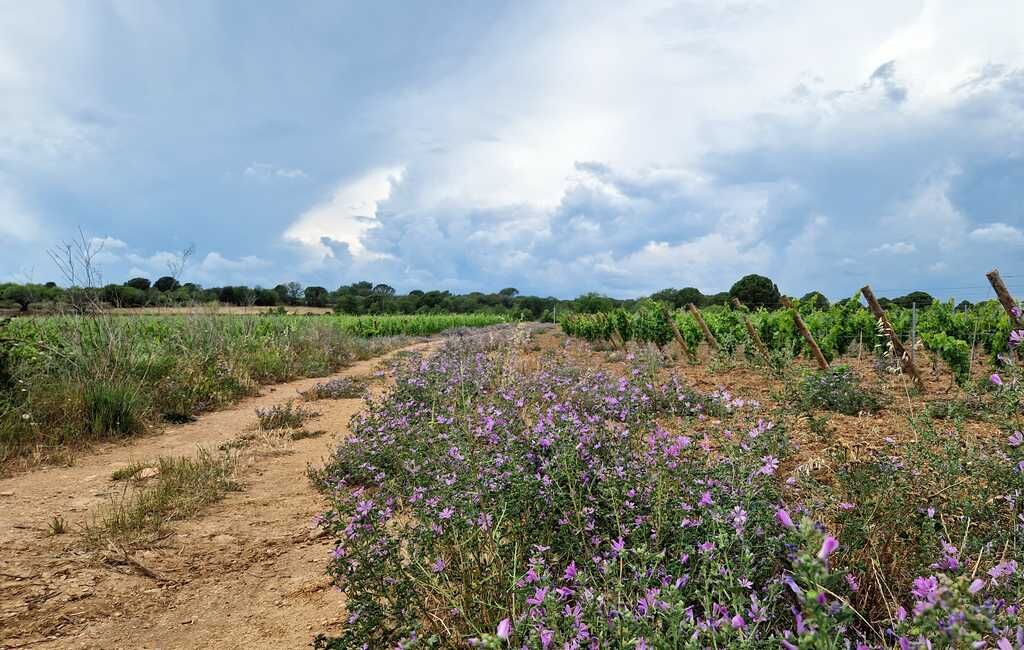
Mediterranean flora: Depending on the season, several species of orchids and plants will be visible: Robert’s bumblebee orchid, Woodcock Ophrys, Serapias lingua, Goat Ophrys, Phlomis with tassels, Limodorum, Orlaya grandiflora, dwarf iris, wild salads…
5
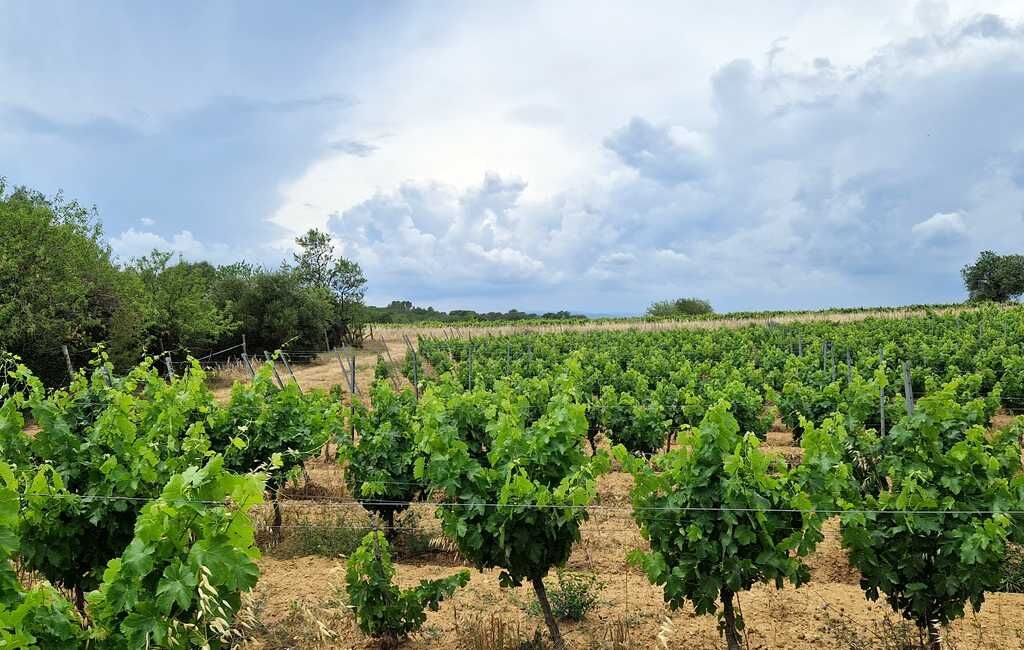
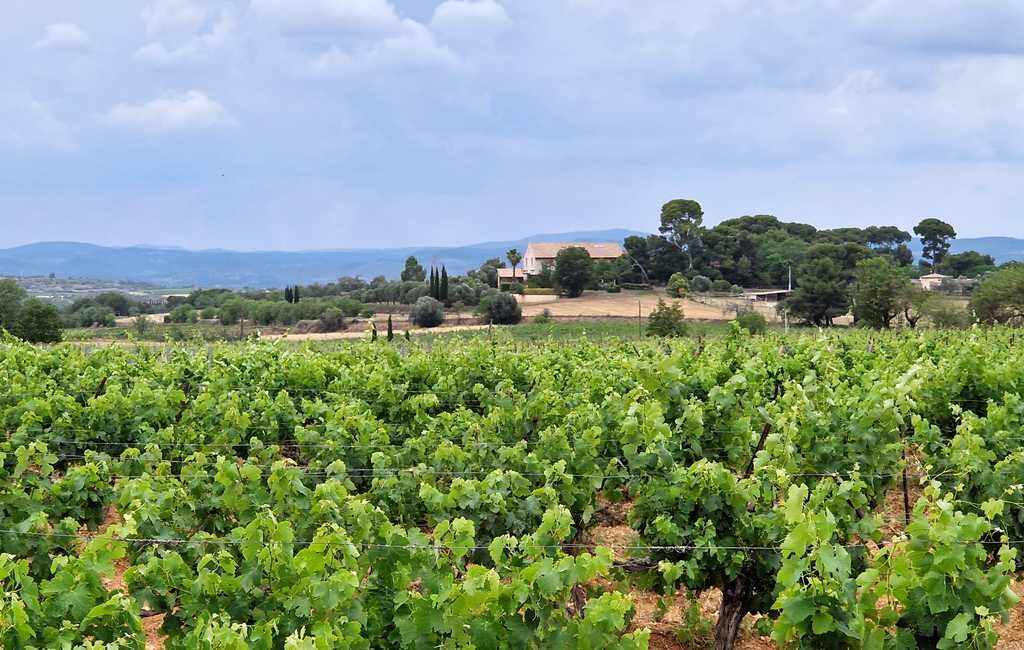
Vineyards and Laval Estate: Along the trail, vineyards stretch as far as the eye can see. It is in this vineyard that winegrowers create authentic and refined wines under three Protected Geographical Indications: Côtes de Thongue, Pays d’Hérault, and Pays d’Oc, which you can taste in moderation in their wine cellars.
6
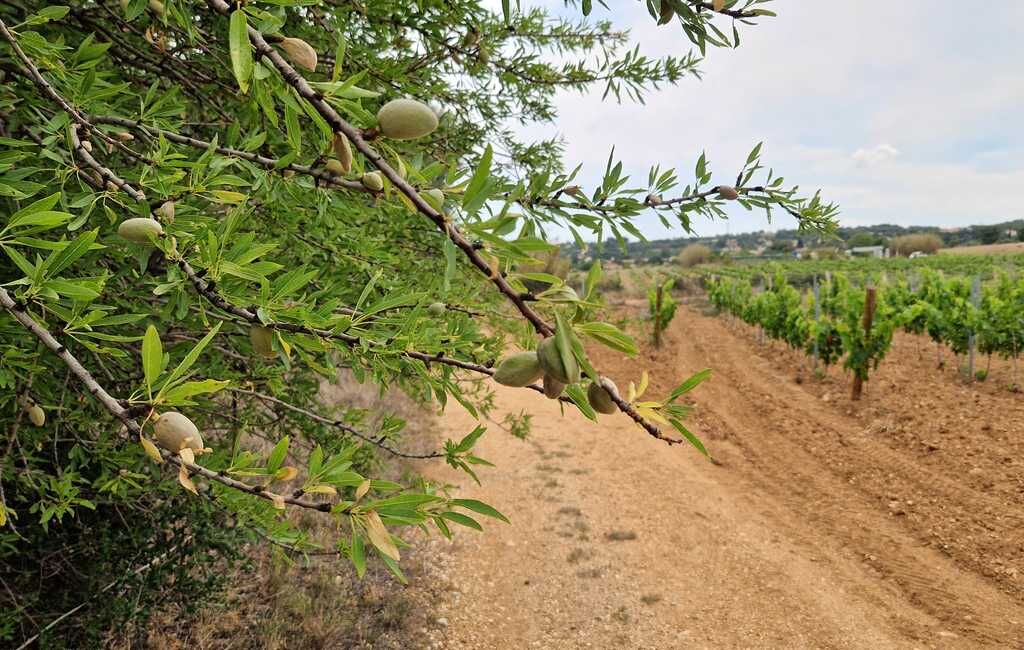
Olive and almond trees
On your left, you pass by a field of olive and almond trees. These trees, typical of our Mediterranean regions, are cultivated for their olives and almonds, which are used both in cooking and cosmetics.
7
Viewpoint over the village: Notice the viewpoint over the village and the Saint Roch Estate (on the right). Turn right for 160 meters to join, on the left, the Caux road.
8
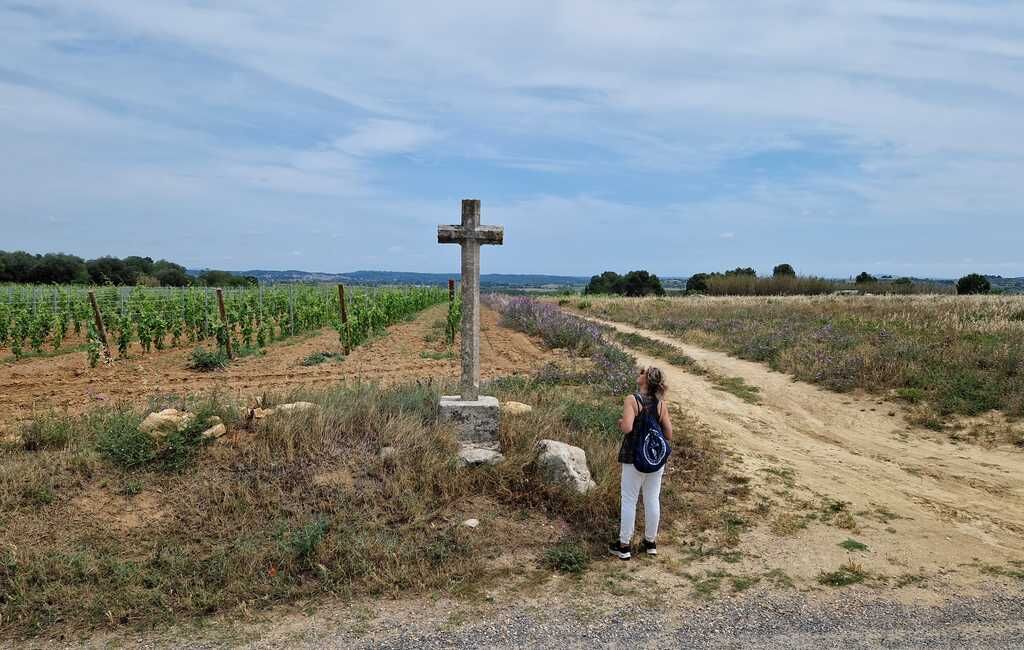
Cross: Do not miss a remarkable element of the small built heritage: a cross dated 1680. Follow the road for 650 meters to return to the village.
9
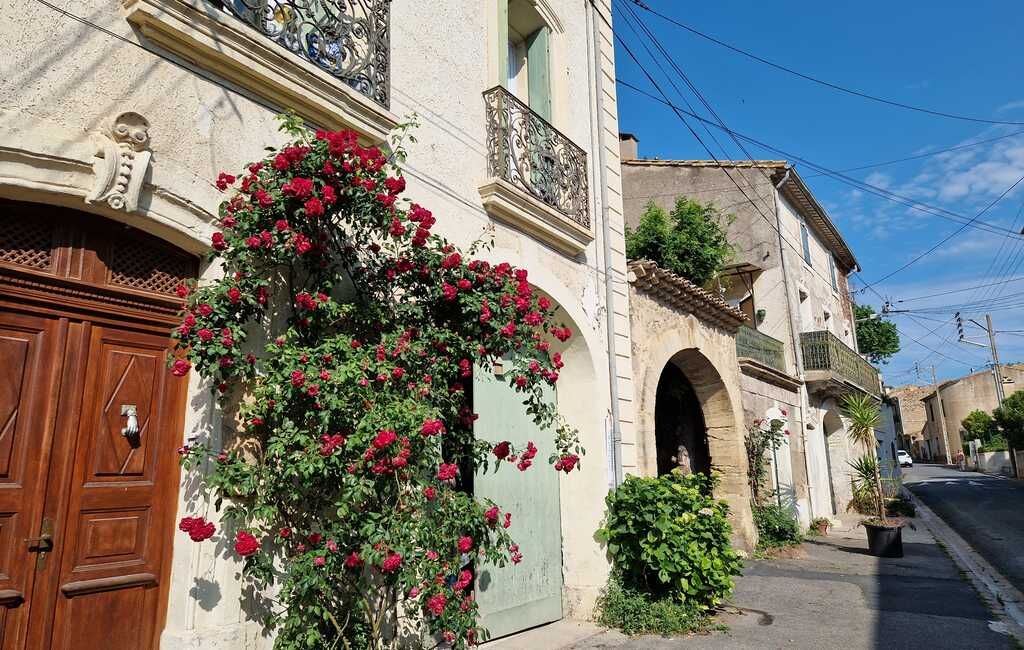
Winegrowers’ houses: Along Tour des Caves street, you can observe beautiful ensembles of winegrowers' houses that testify to a prosperous viticultural period in the 19th century. Distributed along the main axis, these houses stand out by their large façade volume, with part of the building serving both viticultural and residential functions.
In case of emergency, call 112.
Equip yourself with suitable shoes, a water bottle, hats or caps. Respect the environment.
+33 4 67 94 43 92
Tourbes Tourist Information Office
Local interest trails
Priljubljeni izleti v okolici
- 5,0
SAINT ANTOINE HERMITAGE HIKE
svetlobaPohodništvo 9,91 km OENORANDO® THE ART AND NATURE TRAIL
srednjaPohodništvo 15,7 kmOENORANDO® OF THE BALCONS D’ALIGNAN DU VENT
srednjaPohodništvo 12,7 kmOENORANDO® OF THE VINEYARDS AND VOLCANOES OF FONTES
srednjaPohodništvo 11,2 kmCYCLE LOOP No. 26 - THAU POND, ABBEY OF VALMAGNE AND PÉZENAS
srednjaKolesarjenje 63,1 kmVINEYARDS AND VOLCANOES TRAIL OF FONTES
svetlobaTrailrunning 11,2 kmCIRCUIT VTT 19: DE LA CAVE AU MOULIN - ESPACE VTT/GRAVEL CAP D'AGDE MÉDITERRANÉE
svetlobaMountainbike 23,5 kmESTABEL TRAIL
srednjaTrailrunning 28,7 kmOENORANDO® LA THONGUE ET SES COTEAUX
srednjaPohodništvo 14,7 kmVIA DOMITIA HIKE
svetlobaPohodništvo 4,95 km
Pohodništvo in sledenje

Ne zamudite ponudb in navdiha za naslednje počitnice
Vaš e-poštni naslov je bil dodan na poštni seznam.